Thoughts, notes, and explanations on Python, Data Structures, Algorithms, Machine Learning, and learning how to learn effectively.
This section will grow over time with structured posts and practical insights.
Thoughts, notes, and explanations on Python, Data Structures, Algorithms, Machine Learning, and learning how to learn effectively.
This section will grow over time with structured posts and practical insights.
Lesson 6 - Modifying Data & Schema Changes Theory + Practice | ShopDB Before You Start This lesson uses ShopDB. Connect to shopdb in pgAdmin before running any query. Important: This lesson modifies real data. Some queries will permanently change your database. The section on transactions shows you how to do this safely - read Part 7 before running anything you are unsure about. Quick data check: SELECT 'customers' AS t, COUNT(*) FROM customers UNION ALL SELECT 'products', COUNT(*) FROM products UNION ALL SELECT 'orders', COUNT(*) FROM orders UNION ALL SELECT 'order_items', COUNT(*) FROM order_items; -- Expected: 20, 25, 15, 30 What you will learn: ...
Pandas Practice Sheet - IPL Dataset A complete two-table exploration: from match summaries to ball-by-ball intelligence Why IPL Is the Best Dataset for Pandas After Zomato The Zomato dataset taught you how to clean a single messy table. The IPL dataset teaches you something more important: how to work with two related tables and merge them to answer questions neither table can answer alone. This is how data exists in every real company - not as one giant flat file, but as a set of related tables that you must join, aggregate across levels, and reason about carefully. ...
Pandas Practice Sheet - Titanic Dataset 20 Questions from Zero to Advanced, with Full Solutions Getting the Dataset The Titanic dataset is hosted publicly and can be loaded directly into pandas - no download needed. Direct CSV URL (no login required): https://raw.githubusercontent.com/datasciencedojo/datasets/master/titanic.csv Load it in one line: import pandas as pd df = pd.read_csv("https://raw.githubusercontent.com/datasciencedojo/datasets/master/titanic.csv") Or load via seaborn (also free, slightly different column names): import seaborn as sns df = sns.load_dataset("titanic") Always run df.head() and df.info() before answering any question - knowing your data is half the battle. ...
Pandas Practice Sheet - Zomato Bangalore Dataset A complete guided exploration: from raw messy data to real business insights Why This Dataset? The Titanic dataset is clean, small, and predictable. The Zomato Bangalore dataset is the opposite - it is genuinely messy in the way real-world data is messy. Ratings stored as strings like "3.8/5". Costs formatted as "450" with comma-separators ("1,200"). The cuisines column has multiple cuisines packed into one cell separated by commas. Several columns have inconsistent values, duplicates, and missing data scattered across them. ...
## Pratice easy, medium and hard questions on cricket dataset. <!DOCTYPE html> SQL Practice: CricketDB - Codeverra Codeverra · SQL Practice SQL Practice Set CricketDB 12 questions on a cricket dataset - players, matches, and ball-by-ball performances. Easy to hard. Every question has a one-line approach, a clean solution, and alternatives where they exist. ...
## Practice SQL questions on the shopping dataset. <!DOCTYPE html> SQL Practice: ShopDB - Codeverra Codeverra · SQL Practice SQL Practice Set ShopDB 12 questions on an Indian e-commerce dataset - customers, products, orders, and line items. Easy to hard. Every question includes the business context, a one-line approach, a clean query, and alternatives where they exist. ...

Data Structures and Algorithms (DSA) are often treated as a necessary evil, something you grind through only to clear technical interviews. This narrow framing has done more harm than good. It leads to shallow learning, memorized solutions, and frustration when problems slightly change. The truth is simple: DSA is not just about interviews. It is about learning how to think clearly, reason about efficiency, and design solutions that scale. This blog lays out: ...
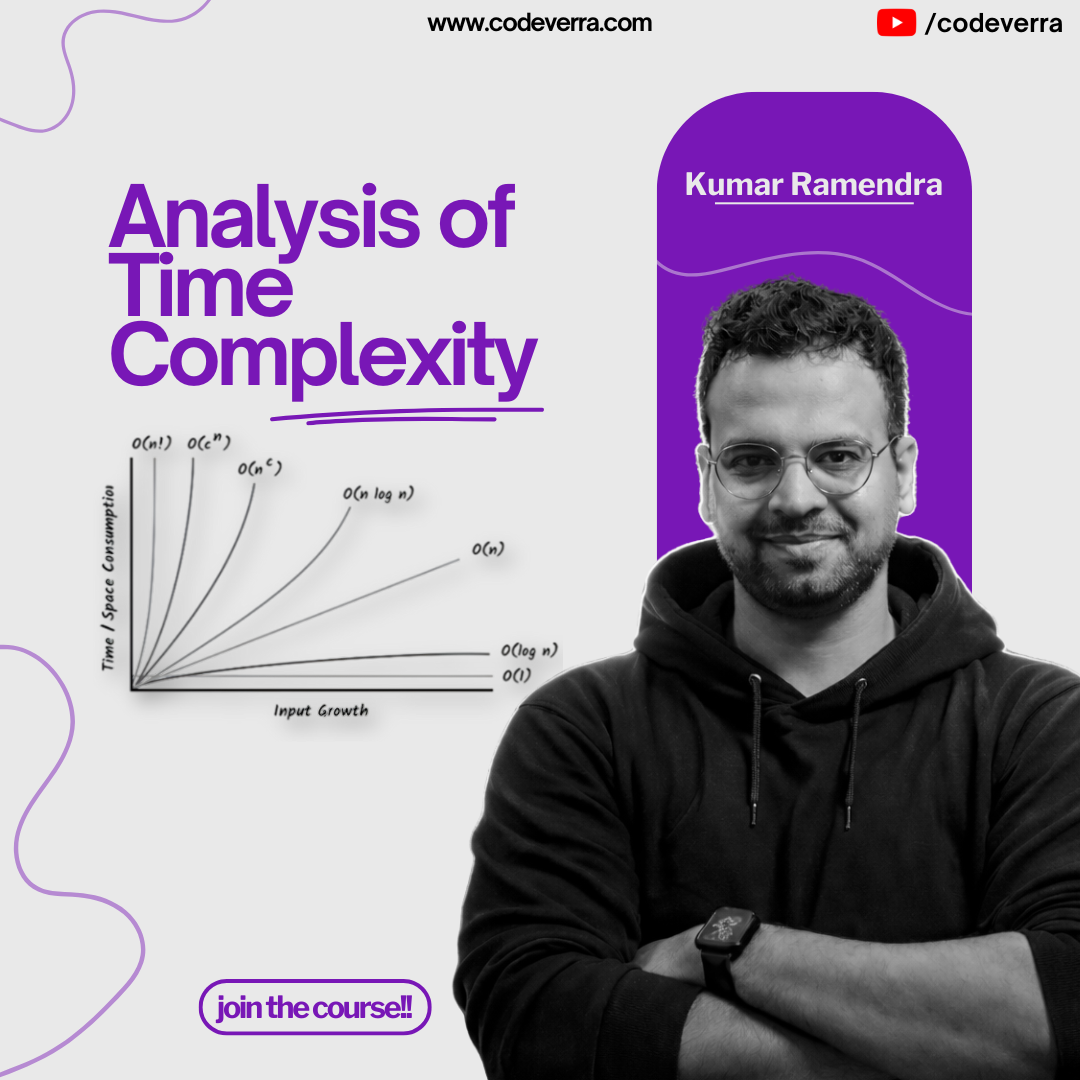
Time complexity is one of the most important concepts in Data Structures and Algorithms. It helps you understand how an algorithm behaves as the input size grows and why some solutions fail to scale. This guide explains time complexity step-by-step using simple explanations and Python examples written purely as text, focusing on intuition rather than heavy mathematics. 1. What Is Time Complexity? Time complexity measures how the running time of an algorithm grows as the input size increases. ...

Array patterns are recurring problem-solving techniques used to solve a wide variety of array problems efficiently. Instead of memorizing individual solutions, understanding these patterns helps you recognize how to approach a problem and design an optimal solution. 1. Traversal Pattern Concept The traversal pattern involves visiting each element of the array once or in a fixed manner. When to Use Finding maximum or minimum elements Printing all elements Counting frequency Simple condition checks Explanation Example Traverse the array from the first element to the last, updating the required result as you move forward. ...